

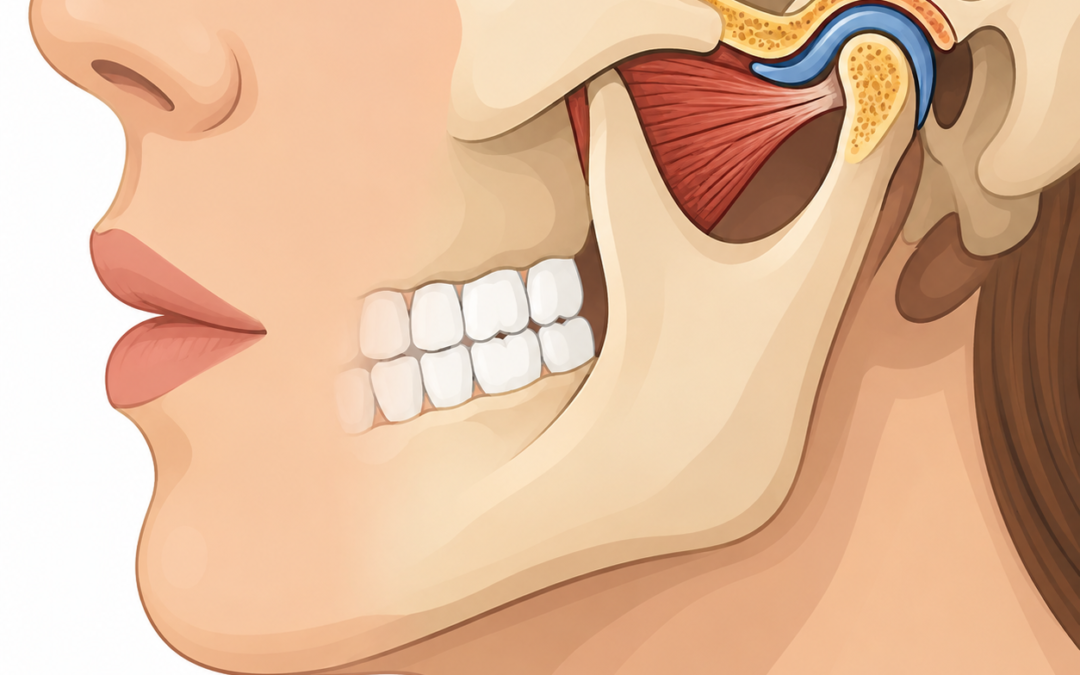
Clicking or popping in the jaw joint usually means a temporomandibular joint disorder, or TMD. A small cushioning disc sits between your skull and your lower jaw. When it slips out of position, it snaps back each time you open or close your mouth, and that snap is the click you hear. Lots of people have it and never think twice. The ones who should are anyone whose clicking turns up with pain, stiffness, or a jaw that catches when it shouldn’t.
According to Dr. Priyam Parikh, a Sleep Medicine Specialist, “A clicking jaw is the joint telling you its disc and muscles have stopped moving in sync. Catch it early and treatment is usually simpler, with far less pain down the line.”
Why Does the Jaw Joint Click or Pop?
Open and close your mouth a few times. That whole motion rides on one small disc gliding inside the joint. Shift the disc, or tighten the muscles around it, and the glide turns into a click.
- Disc displacement. This is the big one. The disc slides forward off the joint, then snaps back as you move. Classic click.
- Teeth grinding. Grind or clench all night and you wear the joint down. The muscles get tired, stop pulling evenly, and the jaw drifts off its track.
- An old injury. A knock to the face. One enormous yawn. Sometimes that’s all it takes to shove the disc out of line, and the joint pops for weeks after.
- Tension you don’t notice. Most people clench when they’re stressed and have no clue they’re doing it. The joint stiffens. How it moves changes, and the click follows.
Figuring out which of these is yours is where any honest TMJ treatment starts.
When Is Jaw Clicking Something to Worry About?
A click here and there with no pain? Usually nothing. The trouble starts when it brings company, the same handful of symptoms showing up night after night.
- Pain with the click. Soreness near the ear or down the jawline means inflammation, not just a disc rattling loose.
- A jaw that locks. Mouth catches halfway. Won’t open all the way, or won’t shut properly. That one needs looking at soon, not eventually.
- Chewing turns into work. You start favouring one side because the other aches, and meals drag on. The joint’s struggling and it shows.
- Headaches and blocked ears. TMJ strain travels upward, so the ache lands in your temples or behind the ear. Most people never link the two back to their jaw.
Night-time grinding is one of the most common triggers, which is why jaw clicking so often turns up in people whose sleep is already broken by loud snoring or stop-start breathing.
Why Choose DreamDent for TMJ Care?
Dr. Priyam Parikh has spent more than fifteen years on jaw and sleep problems, and she was the first in India to earn International Certificant status with the American Board of Dental Sleep Medicine. At DreamDent the jaw never gets looked at in a vacuum. The joint, the muscles, the bite, the way you breathe at night, all of it gets read together.
For a clicking jaw, that means a proper diagnosis before anything else, then a plan shaped around you. Often that’s a custom splint, a bit of myofunctional therapy, and a few habit changes to take the load off the joint. TMJ specialists and physiotherapists work under one roof here, so your jaw isn’t passed around or treated piecemeal.
Jaw clicking or popping while eating or talking? Find out if it’s TMJ-related. Book an appointment with our specialists today.
Frequently Asked Question
Is jaw clicking always a sign of TMJ disorder?
Not always. A painless, occasional click is often harmless, but clicking with pain or locking usually points to a TMJ disorder.
Can a dentist treat a clicking jaw?
Yes. TMJ specialists treat it with custom splints, jaw therapy, and habit correction, with surgery rarely needed.
Does jaw clicking go away on its own?
Mild clicking sometimes settles, but clicking with pain or locking rarely resolves without proper assessment and treatment.
Can stress cause jaw clicking?
Yes. Stress often leads to clenching and grinding, which strain the joint and pull the jaw out of its normal path.
Disclaimer: The information shared in this content is for educational purposes only and not for promotional use.
